Abstract
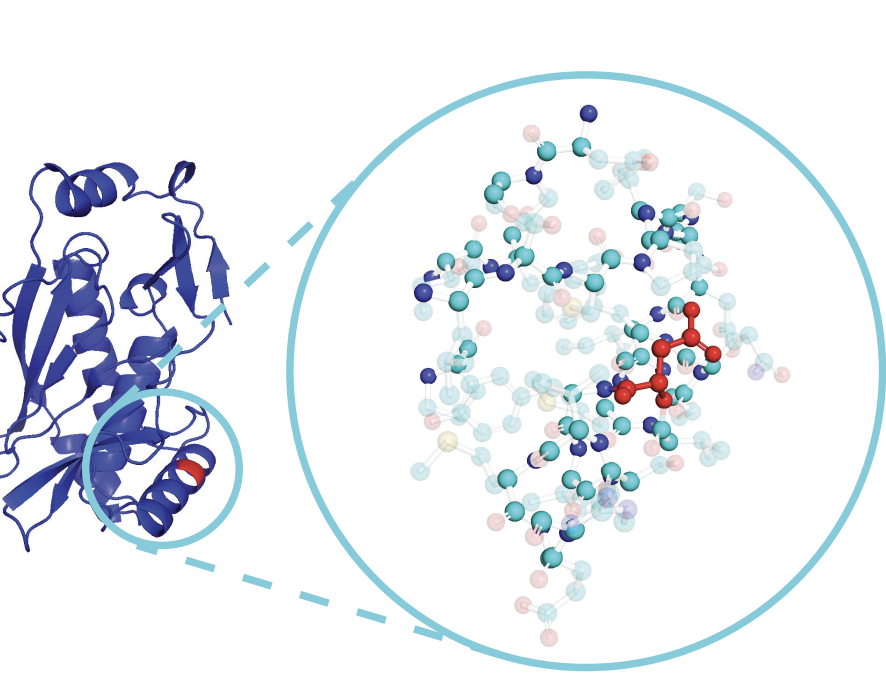
Here, we present ProDESIGN-LE, an accurate and efficient approach to protein sequence design. ProDESIGN-LE adopts a concise but informative representation of the residue’s local environment and trains a transformer to learn the correlation between local environment of residues and their amino acid types. For a target backbone structure, ProDESIGN-LE uses the transformer to assign an appropriate residue type for each position based on its local environment within this structure, eventually acquiring a designed sequence with all residues fitting well with their local environments. We applied ProDESIGN-LE to design sequences for 68 naturally occurring and 129 hallucinated proteins within 20 s per protein on average. The designed proteins have their predicted structures perfectly resembling the target structures with a state-of-the-art average TM-score exceeding 0.80. We further experimentally validated ProDESIGN-LE by designing five sequences for an enzyme, chloramphenicol O-acetyltransferase type III (CAT III), and recombinantly expressing the proteins in Escherichia coli. Of these proteins, three exhibited excellent solubility, and one yielded monomeric species with circular dichroism spectra consistent with the natural CAT III protein.